
Emergency Luminaires
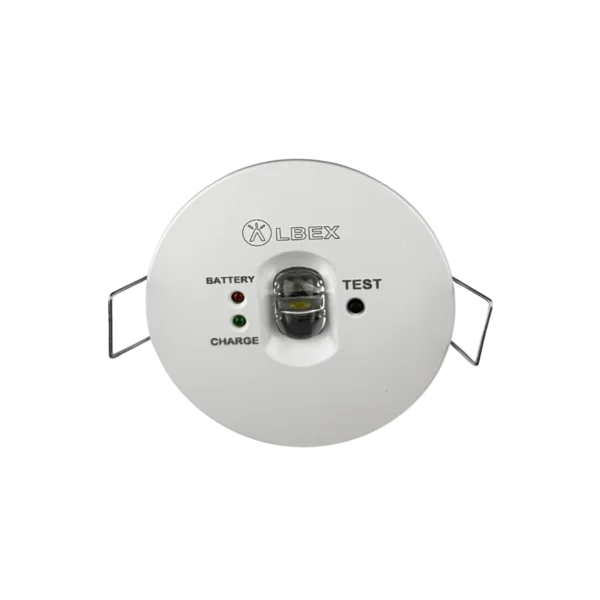
An emergency luminaire switches on automatically with its internal battery during a power failure and provides the minimum illuminance needed for safe evacuation in corridors, stairs and plant rooms.
Products
Related guides
- How Should Emergency Lighting Be Maintained? Standards and Practical Guide
Emergency lighting systems must be tested regularly under TS EN 1838 and the Turkish Regulation on the Fire Protection of Buildings, and the results entered in the logbook: a short functional test, a monthly test of 3–5 minutes and an annual full-discharge test that measures the battery's real capacity. Luminaires must switch on within a few seconds of a mains failure and operate for at least 1 hour; 3 hours are chosen where the regulation or project specification requires it.
Frequently Asked Questions
What is the difference between maintained and non-maintained emergency luminaires?
A maintained luminaire is also lit in normal operation and continues on battery during a power failure. A non-maintained luminaire only switches on when the mains fails.
How quickly should an emergency luminaire switch on?
It should switch on within a few seconds of a mains failure; at least 1 lux must be provided on the centre line of escape routes.